
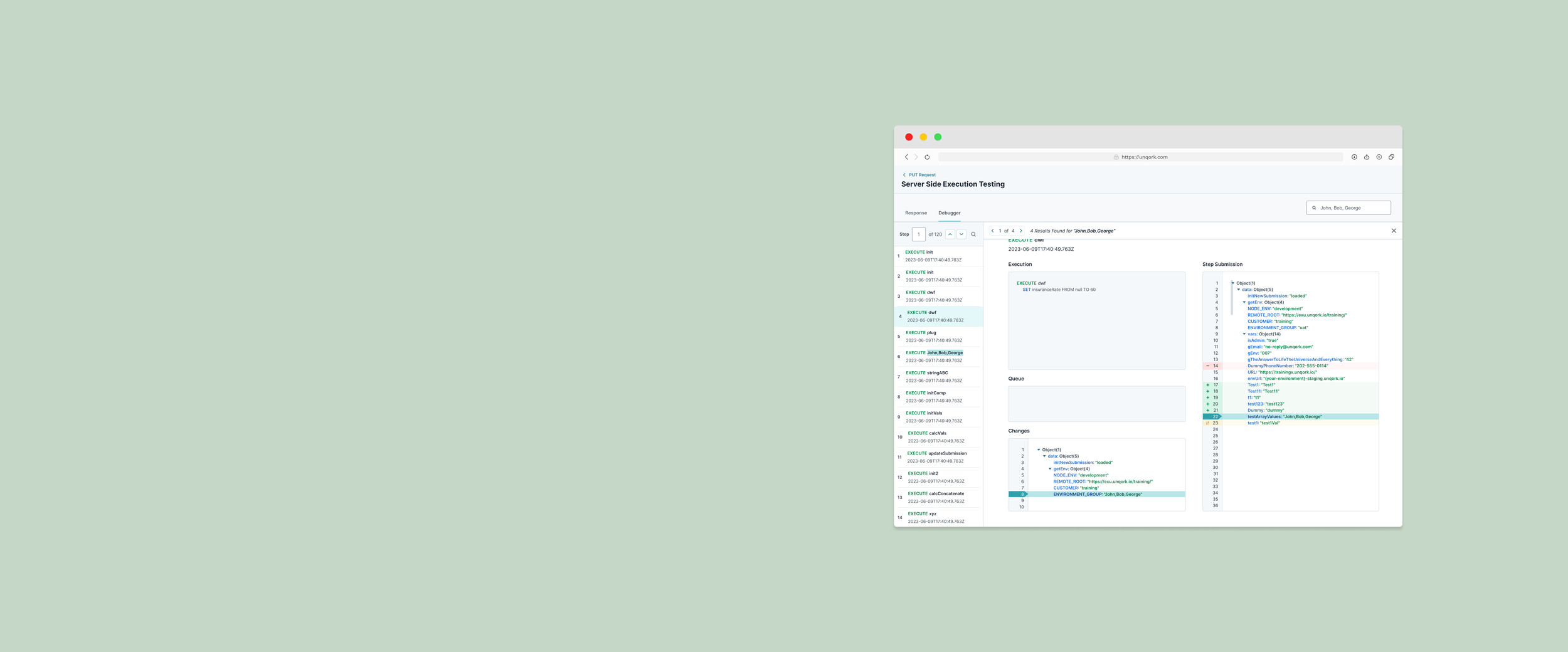

Increasing Usage by 15% with IDE Debugging Paradigms
DEVELOPER TOOLS | ENTERPRISE B2B SAAS
PROJECT OVERVIEW
SKILLS
UX for Technical Workflows
Error Handling & Guardrails
Design System
ROLE
Lead Product Designer
TIMELINE
6 Weeks (June-July 2023)
OVERVIEW
As configurations scale, debugging server-side execution becomes critical, especially for Solutions Architects (SAs) and advanced configurators responsible for reliability, performance, and error handling. I led design for Server-Side Execution Testing, an internal debugger tool that allows users to test, inspect, and diagnose backend logic before deploying configurations.
PROBLEM
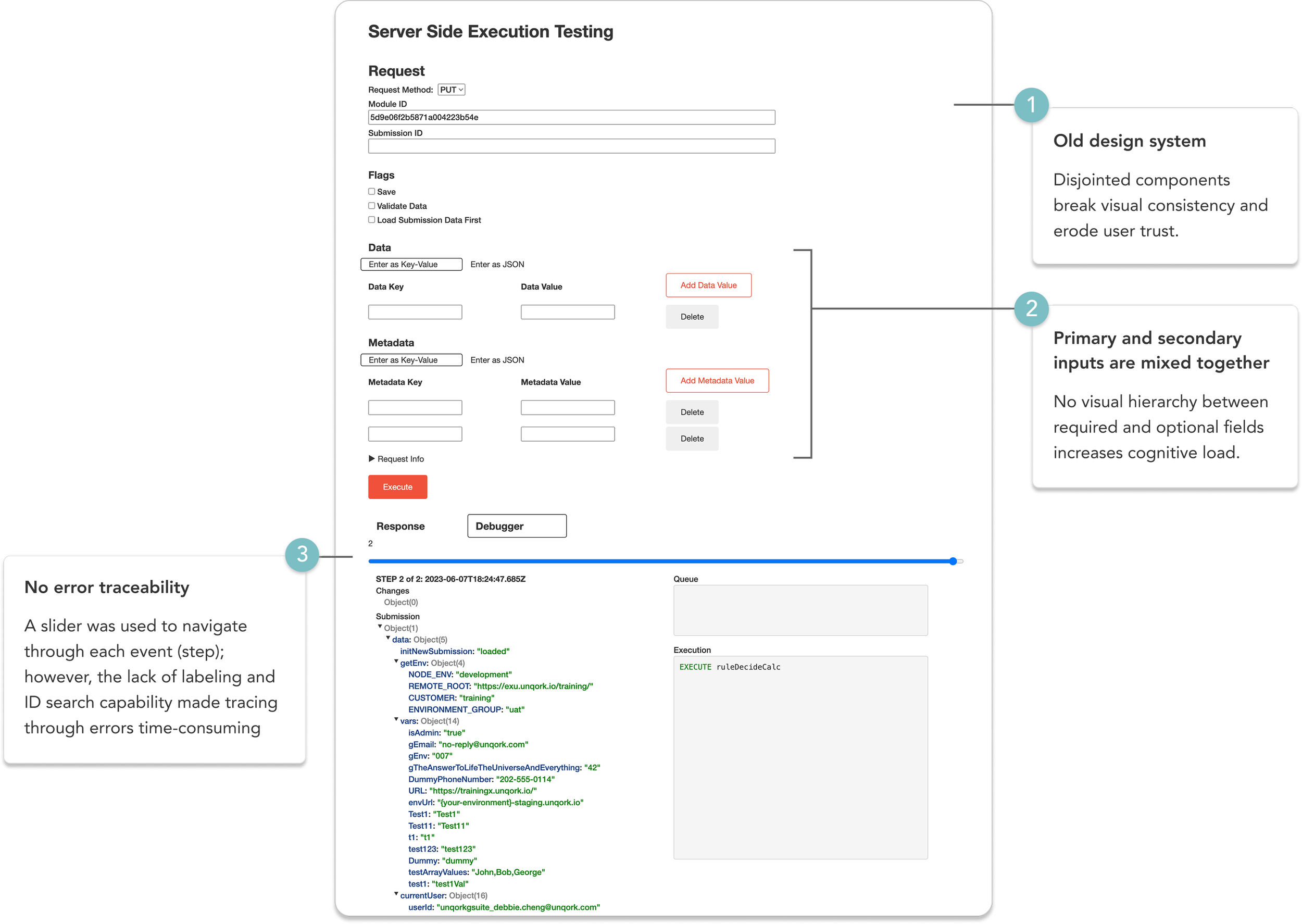
While the main objective was to reskin the UI with the new Unqork design system, it was my job to go beyond the surface and improve the usability and adoption of the tool. There were no clear guardrails, documented workflows, or success metrics - only a dense, interaction-heavy tool with many opportunities for improvement.
RESULTS
Increased weekly active usage by ~15% within two months of launch
PROBLEM
Users relied on trial-and-error deployment rather than structured debugging
Although powerful, the debugger was underutilized and misunderstood. Even advanced Solutions Architects didn’t know how to use it effectively.
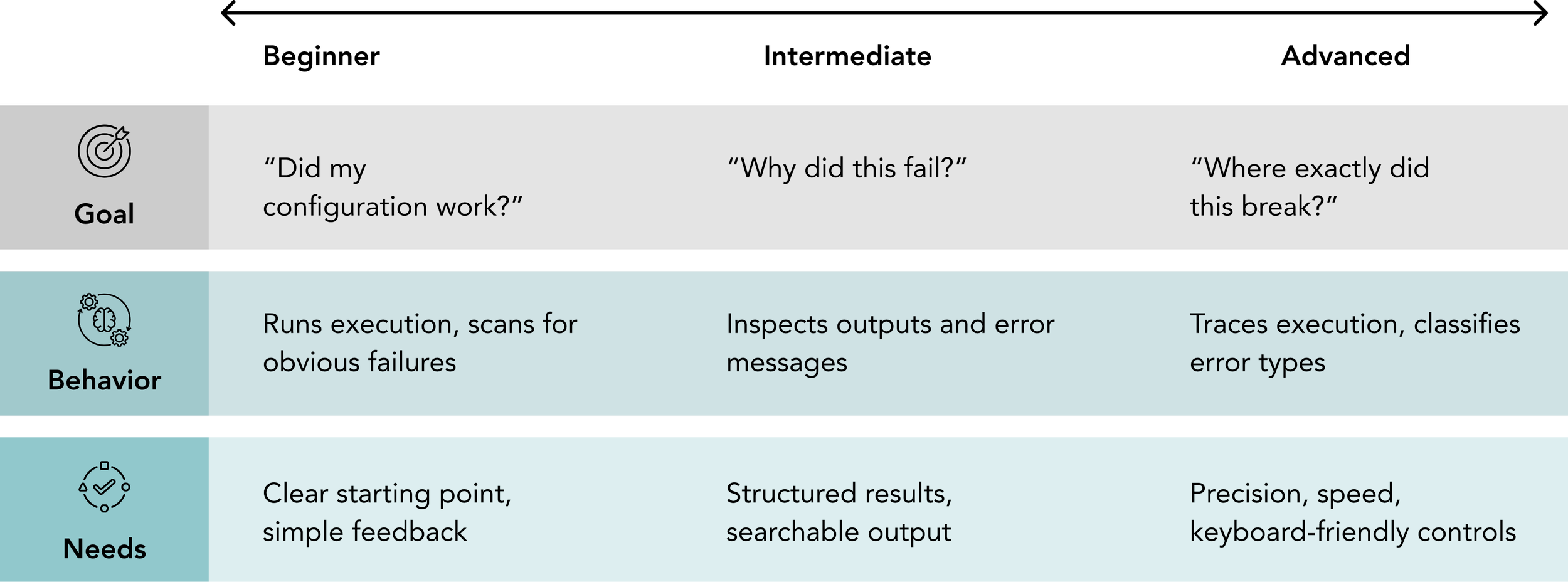
The core design challenge: the same surface had to serve first-time users and power users without fragmenting the experience.
Before: Server Side Execution Testing
DESIGN
Navigating ambiguity by referencing mental models and first principles
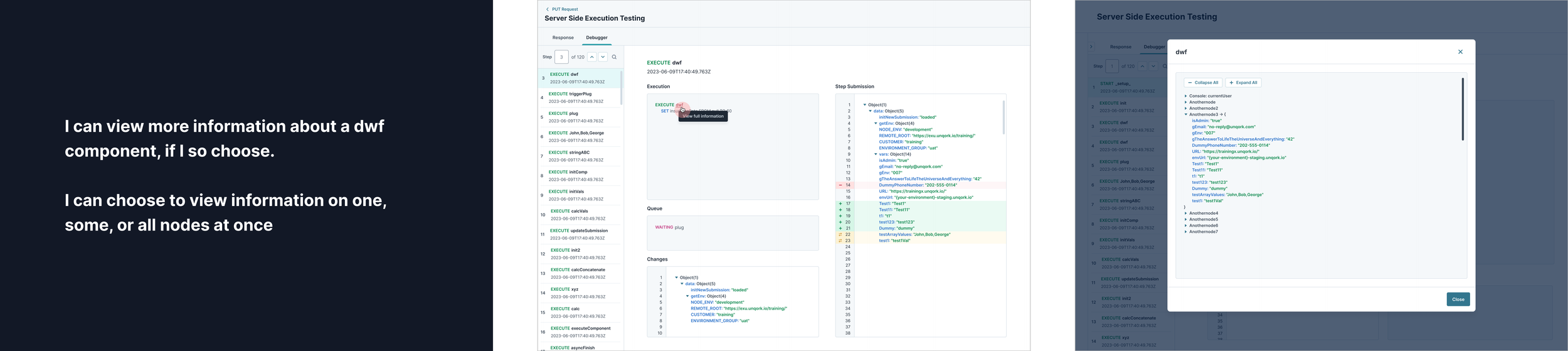
1. Borrow IDE mental models
Even in a low-code environment, users carry expectations from tools like VS Code. I mapped those conventions onto Unqork's debugger to reduce the learning curve without requiring traditional code literacy.

2. Restructure around inputs, execution, and errors
The original IA buried the most important information. I reframed the hierarchy so users could immediately understand what they control, what the system returns, and where failures occur.
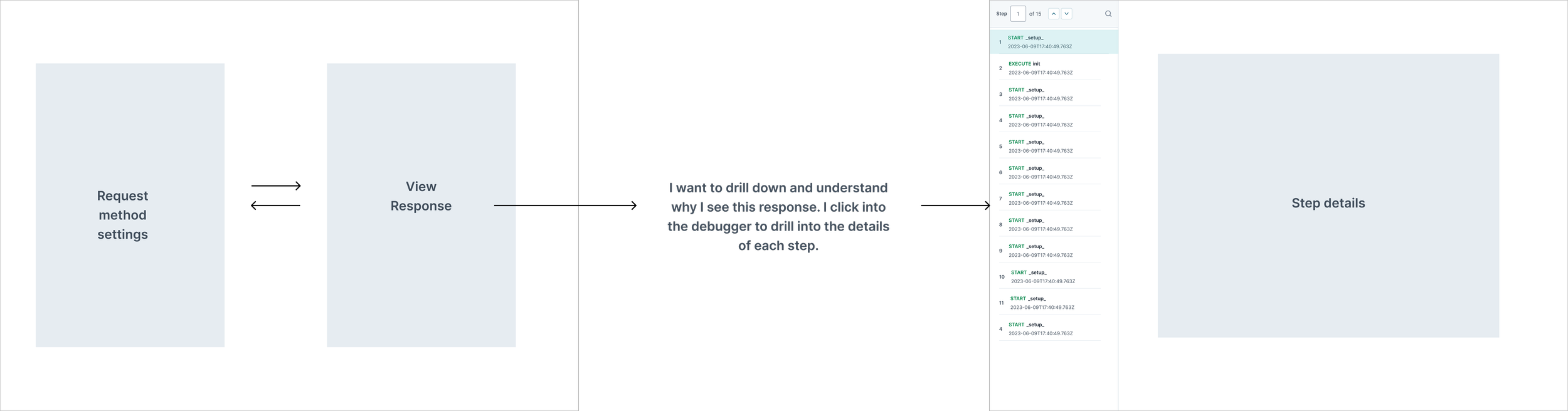
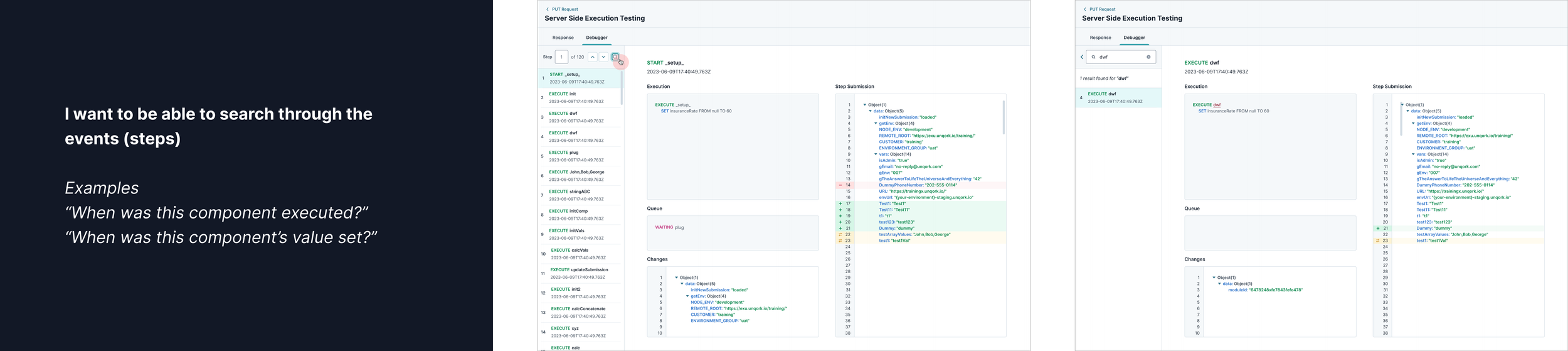
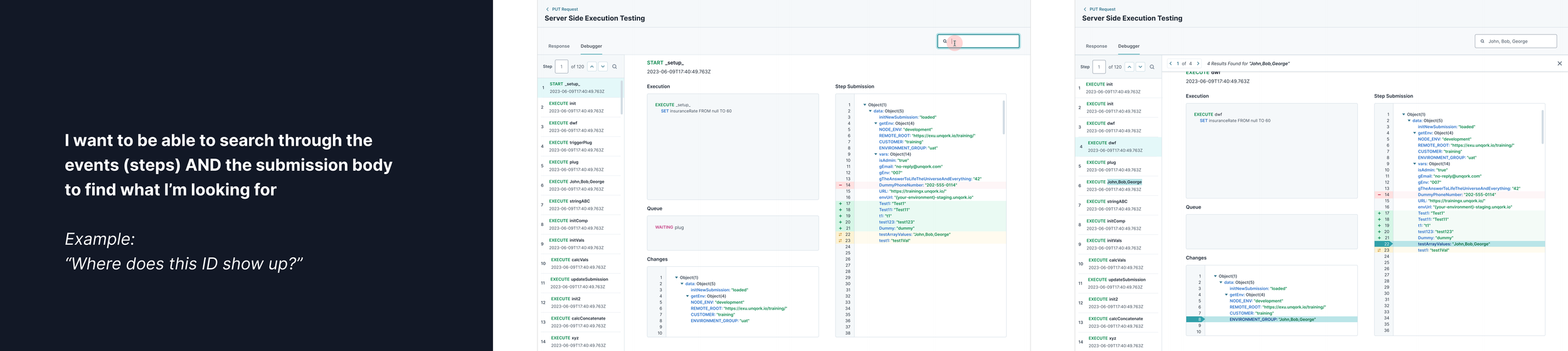
3. Make errors findable
Errors were surfaced, searchable, and categorized — reducing the time spent scanning dense execution output. I validated each sprint with internal Solutions Architects.
DEVELOPER HANDOFF
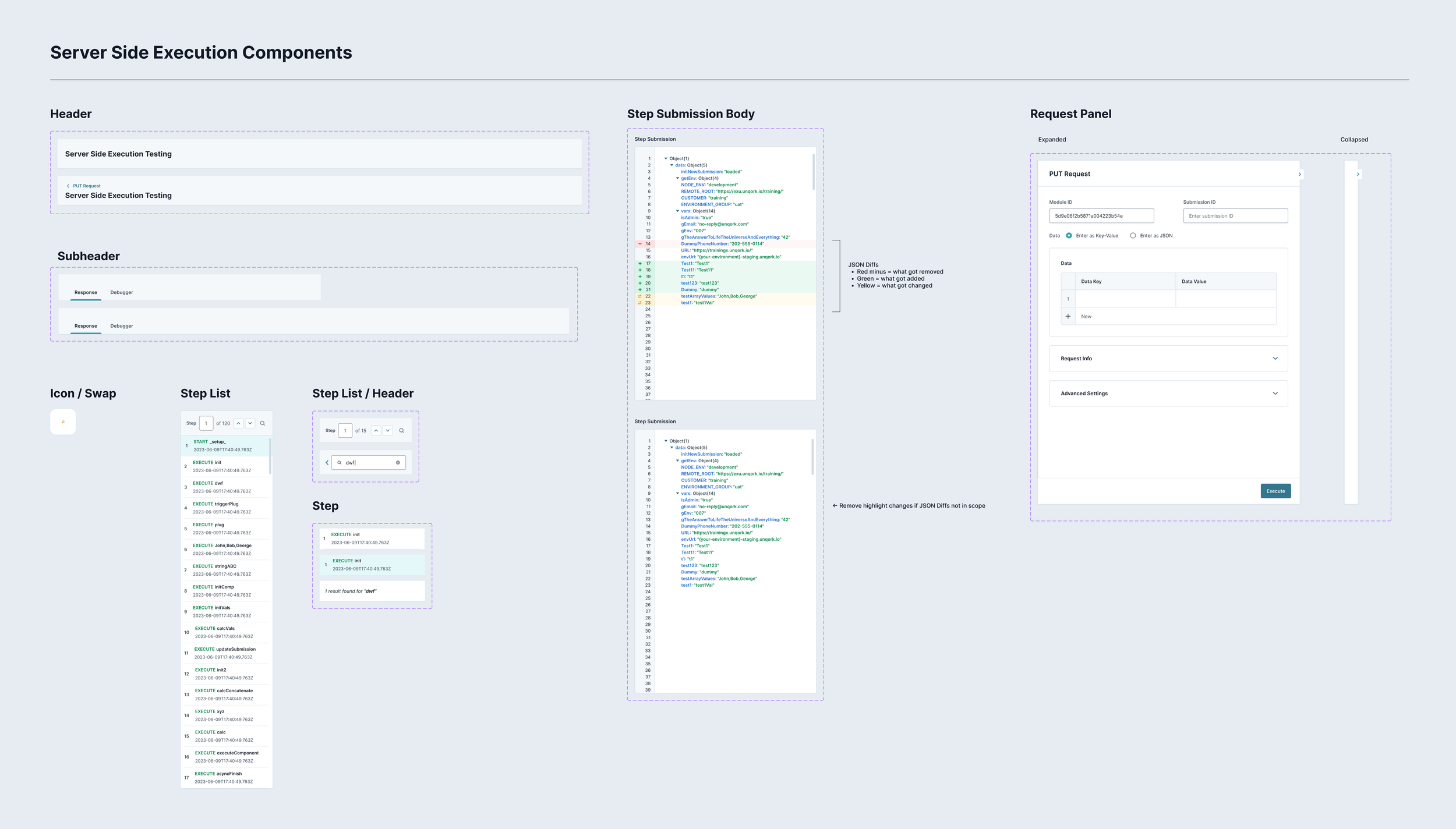
Extending the Design System for Debugging Workflows
Not only did I migrate the SSE debugger to the new Unqork design system, but I also introduced new components that the design team has since used in other surface areas. I prepared detailed annotations with these components for the front-end development team.
OUTCOME
Increased weekly active usage by ~15% within two months of launch
The redesign aligned teams around a clearer mental model for debugging within a low-code environment. Key outcomes include:
Reduced reliance on guesswork during deployment
Helped users identify, search, and understand errors more quickly
Brought the experience closer to a true IDE-like debugging workflow
Established a scalable foundation for future debugging enhancements