Building an AI-assisted system for creating, explaining, and fixing formulas
DEVELOPER TOOLS | ENTERPRISE B2B SAAS
PROJECT OVERVIEW
OVERVIEW
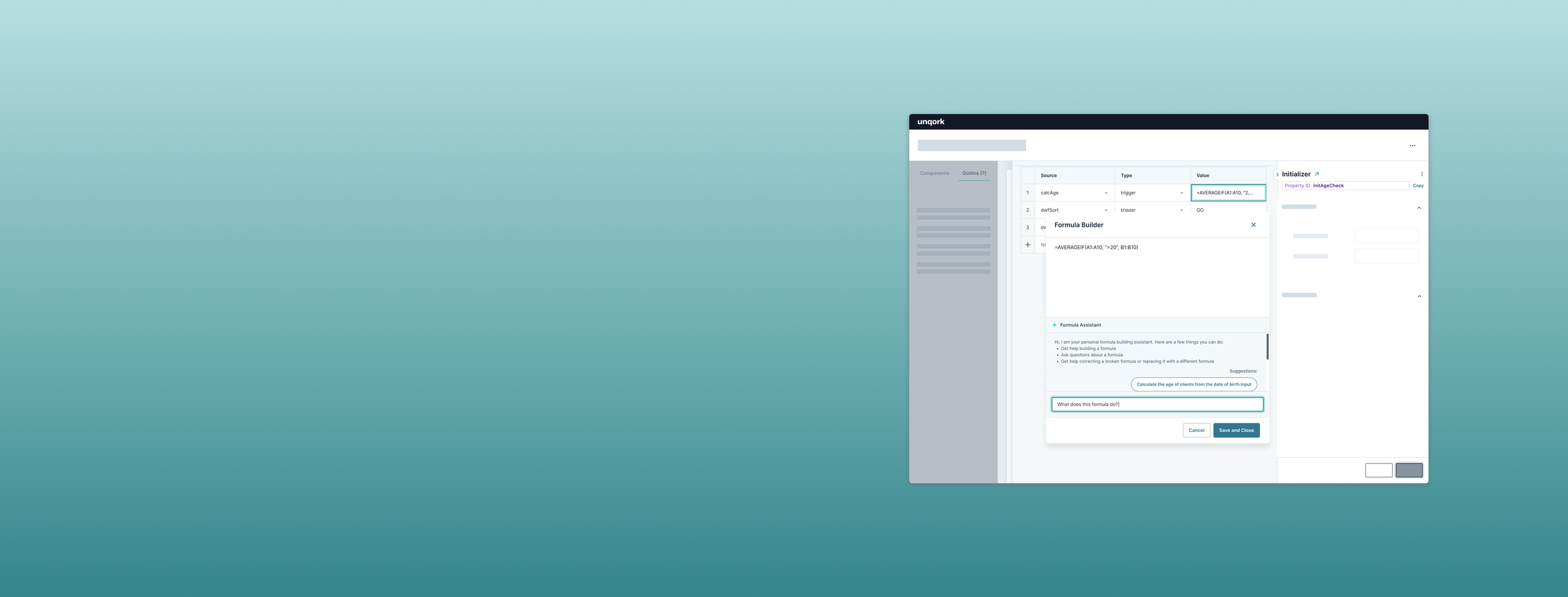
Formulas are powerful but notoriously hard to create, debug, and understand. This Unqork project explored how AI could act as a collaborative assistant inside a technical creation workflow, helping users build and fix formulas using natural language while preserving control and trust.
THE RESULT
an AI Formula Companion: a contextual popover that lives directly inside a formula cell and supports creation, explanation, and error recovery without forcing users to leave their work.
SKILLS
AI Interaction Design
System & State Modeling
UX for Technical Workflows
Error Handling & Guardrails
ROLE
Lead Product Designer
TIMELINE
3 Weeks (September 2023)
PROBLEM
Users building formulas face three persistent challenges:
High cognitive load: Complex syntax and nested logic are difficult to reason about.
Error-prone workflows: Small mistakes lead to broken formulas and frustrating debugging cycles.
Fragmented help: Users jump between product docs, forums, and external references to solve a single issue.
Insight: Formulas represent structured intent, making them an ideal candidate for AI-assisted translation from natural language to logic.
DESIGN RESEARCH
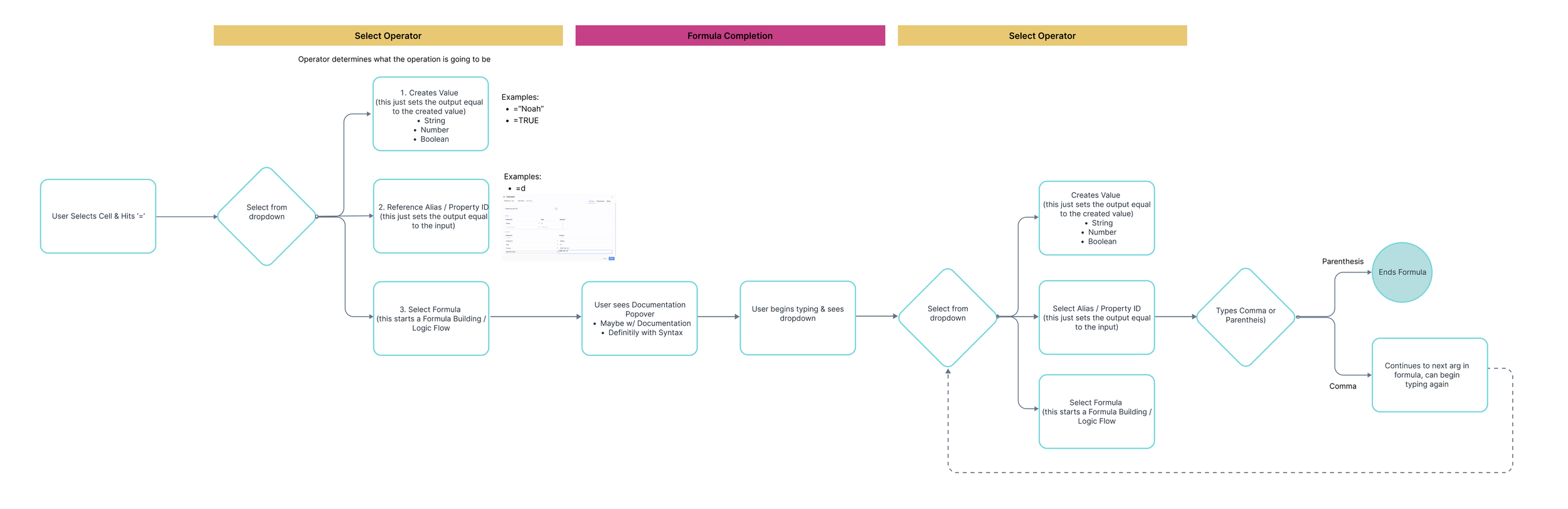
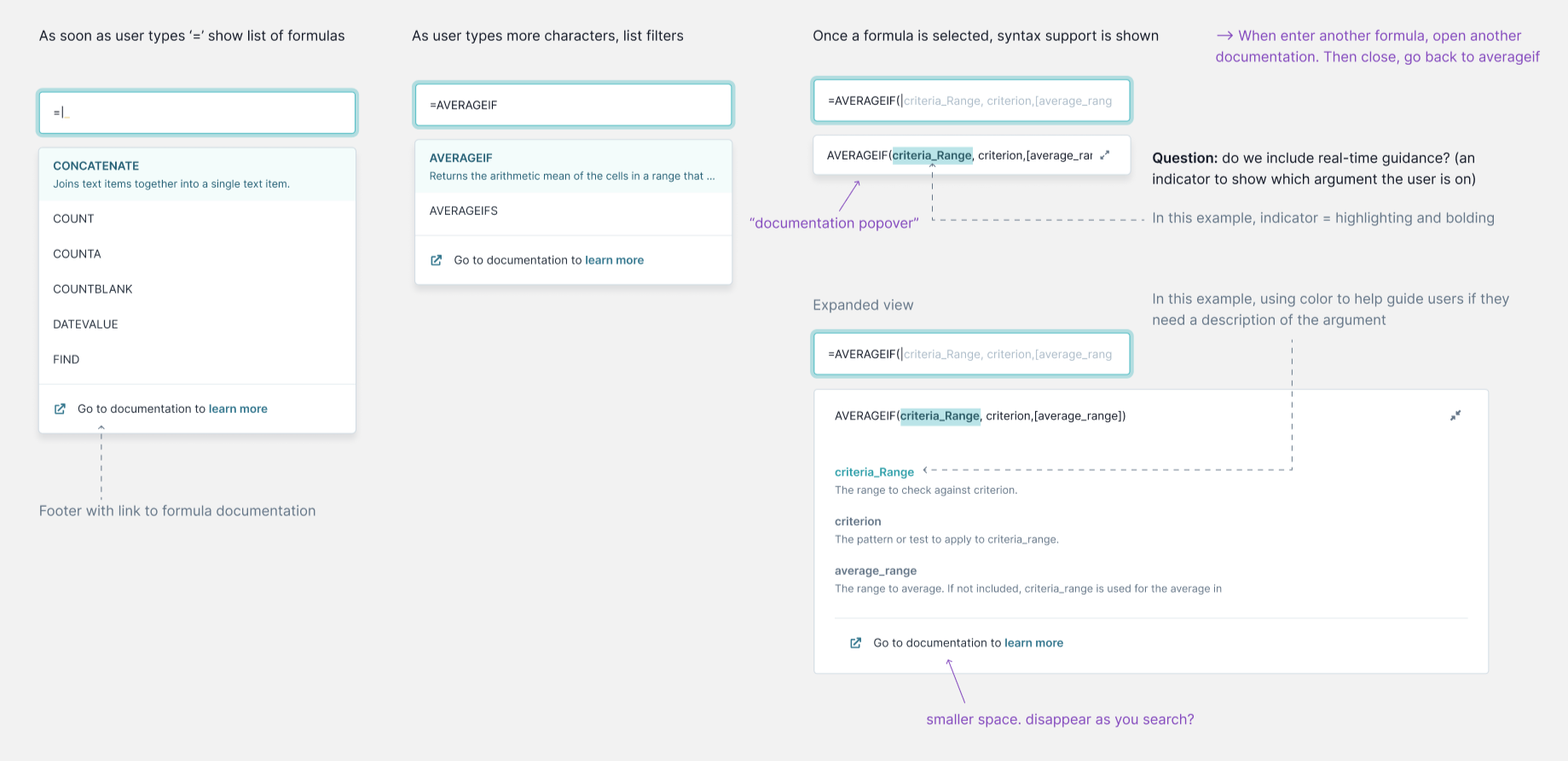
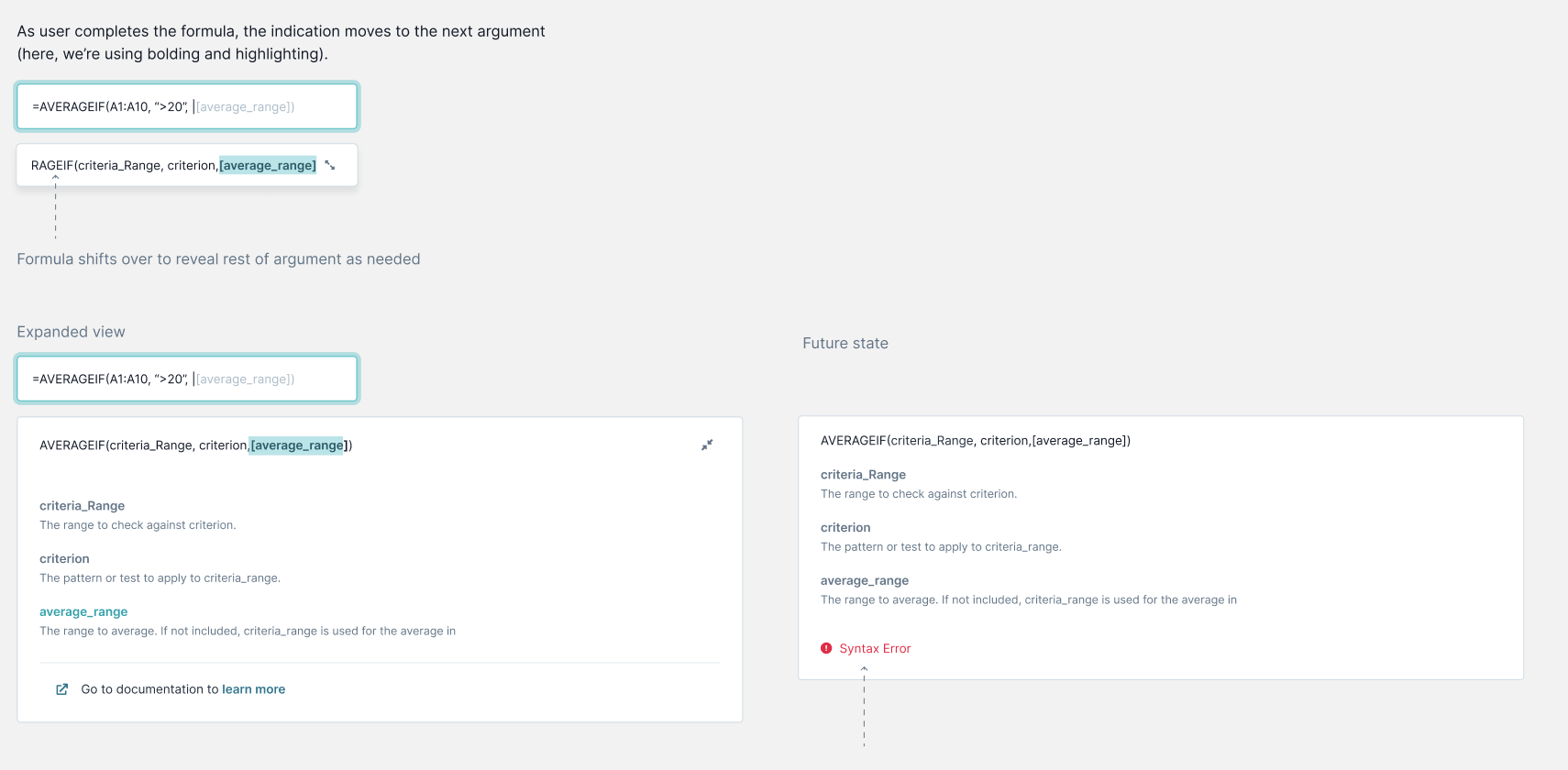
This project built on a prior Formula Autocomplete initiative I led, which gave me existing research on how creators approach formula building across Excel, Tableau, and Unqork. I supplemented this with competitive analysis of AI tools (Google Duet, Notion AI) and formula builders (Google Sheets, Coda).
Insight: the most effective AI tools are contextual and assistive, not separate chat destinations. Users don't want to leave their workflow to get help — they want help to come to them.
Previous autocomplete artifacts:
DESIGN PROCESS
Building a Reliable Human<>AI Workflow
I mapped five core states the AI needed to support: opening the builder, creating a formula from natural language, explaining an existing formula, safely modifying a working one, and diagnosing a broken one.
Because Unqork had no existing chatbot UI, I created new interaction patterns from scratch — recommended prompts, user inputs, and AI responses — each visually distinct to reinforce clarity and trust.
Working closely with platform engineers, I ensured AI suggestions were non-destructive and reversible. The design philosophy shifted from novelty to predictability, which is critical for AI in technical workflows.
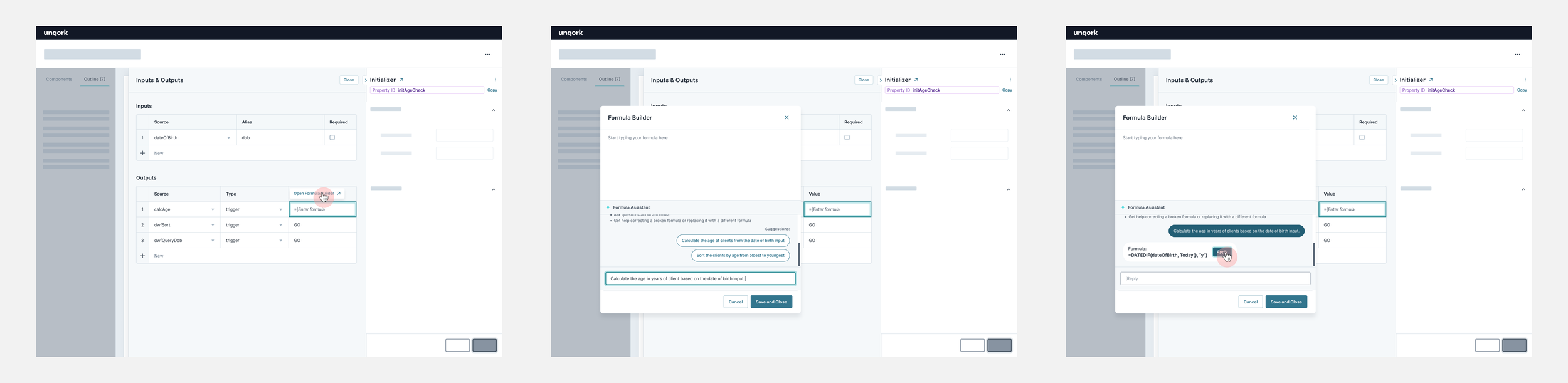
Flow 1: Create a formula using natural language
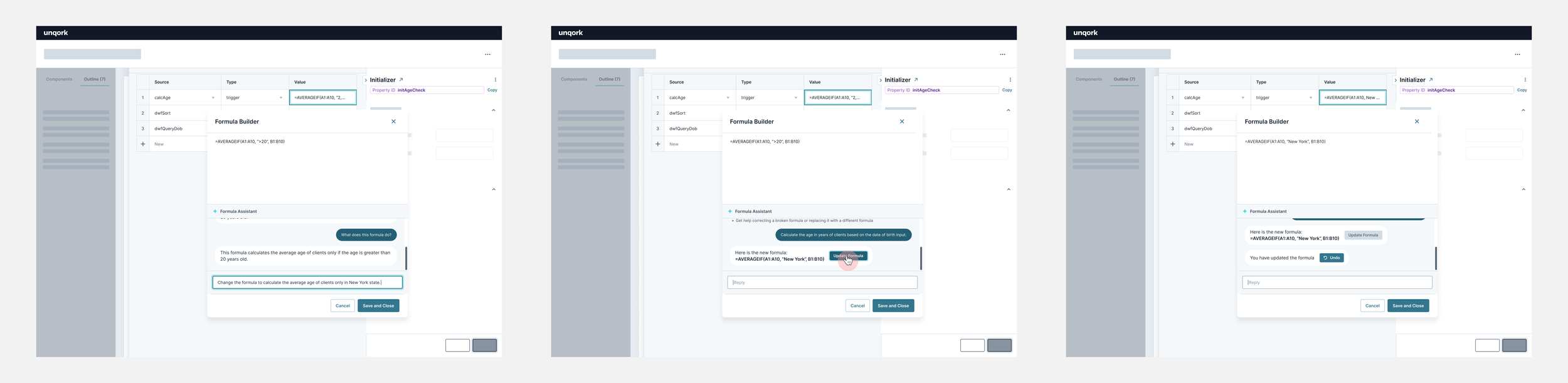
Flow 2: Get help changing an existing formula
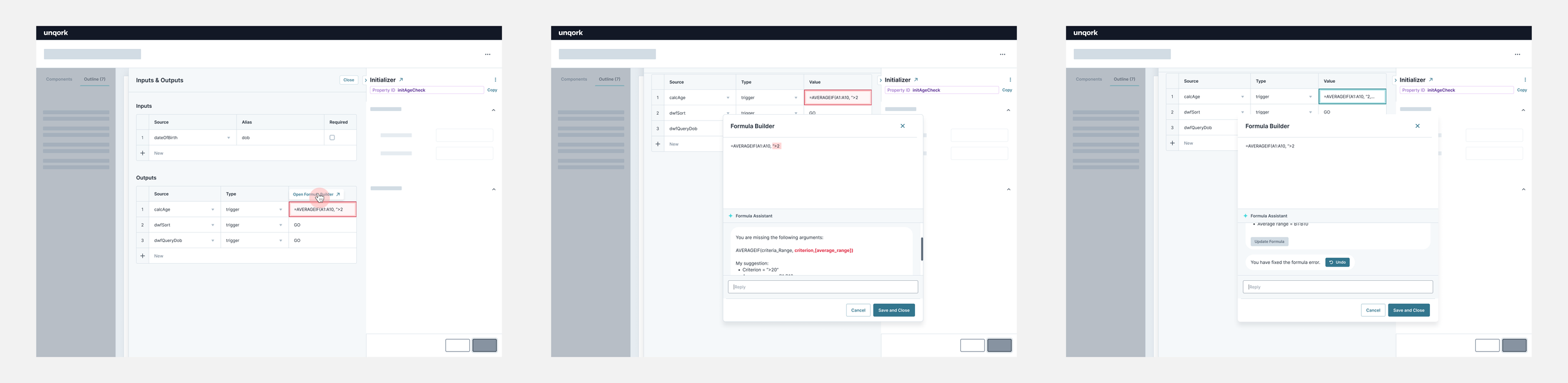
Flow 3: Fix a broken formula in seconds
OUTCOME